
Traditional Cretan food: 10 dishes you should try
FOOD & WINE
Author: Tonia
12 min read
A journey through the flavors of the island of Crete
When you visit Crete, you're not just stepping onto an island—you're entering a living kitchen where traditions have simmered for thousands of years. The food here isn't just delicious; it's a language, a history lesson, a love letter written in olive oil and wild herbs.
After twenty years on this island, I've learned that Cretan cuisine is more than recipes. It's about sitting at a table under a grapevine while someone's yiayia (grandmother) brings out dishes that have been made the same way for generations. It's about understanding why every meal starts with a generous pour of olive oil and ends with a toast of raki.
Let me guide you through the essential dishes you absolutely must try when you visit. And if you're staying at Tonia's Cottage, you're perfectly positioned to discover the tavernas where these traditions are still alive.
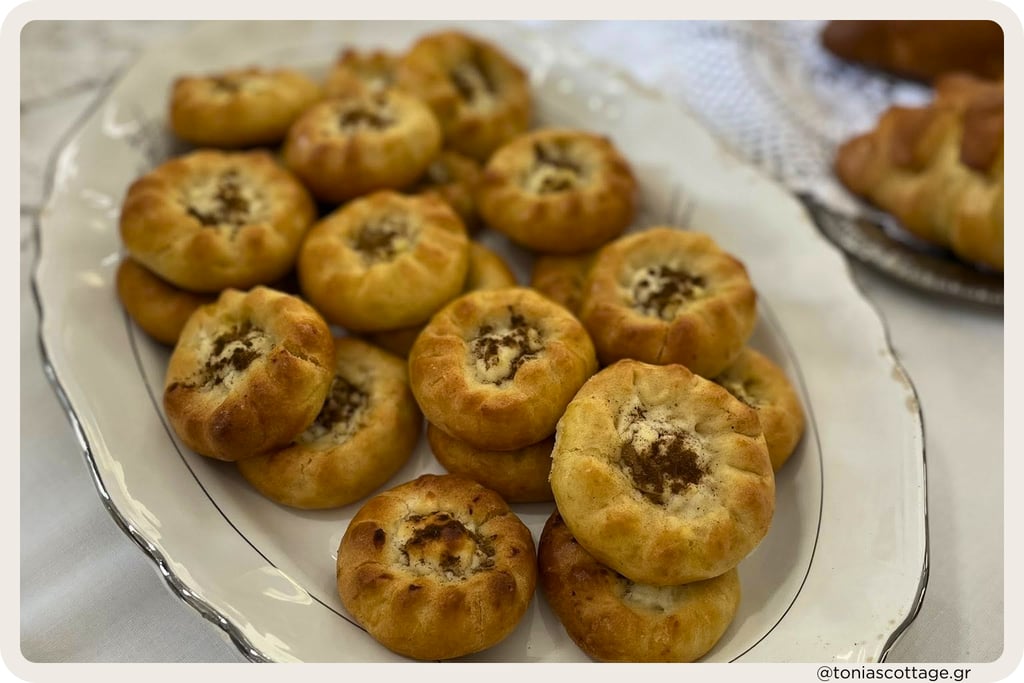
3. Kalitsounia (Sweet or Savory Cheese Pastries)
These little pastries are pure Cretan soul food. There are two main versions: sweet and savory. (I always gift these to my guests at Tonia's Cottage. They're the perfect welcome treat! ❤️)
Sweet kalitsounia, often called lychnariakia (little lamps), are filled with fresh mizithra cheese mixed with honey and sometimes mint. The name comes from their distinctive shape: dough circles are filled, folded, and sealed with delicate pleats that resemble the flame of a traditional oil lamp. They're dusted with cinnamon or powdered sugar and traditionally prepared for Easter on Holy Thursday, though you'll find them year-round wherever fresh cheese is available.
Savory kalitsounia contain wild greens (horta), herbs, or tangy xinomyzithra cheese, sometimes with mint or spinach. Popular in Chania and Rethymno, these are either fried in olive oil or baked until golden, and occasionally drizzled with honey for a sweet-savory balance. They're served as appetizers or light meals.
The dough is delicate, the filling is creamy, and when you bite into one still warm from the oven, you understand why these have been made here for centuries. In Alagni's surrounding villages, local bakers make them fresh, and you'll often find them at celebrations and festivals.
What makes Cretan food special?
Before we dive into specific dishes, here's what you need to know: Cretan cuisine is considered the healthiest Mediterranean diet in the world. It's built on olive oil (and lots of it), fresh vegetables from nearby gardens, locally raised meat, wild greens from the mountains, and cheese from sheep and goats that graze on herbs.
In Crete, you don't find restaurants—you find tavernas. These family-run establishments serve home-cooked food at honest prices (usually €10-15 for main dishes), often prepared by multiple generations working together in the kitchen. During summer, you'll find tavernas open everywhere, from mountain villages to coastal harbors. In winter, many family businesses close, so check ahead.
A few things to expect at every Cretan taverna:
Start with meze: Order appetizers first, bread arrives alongside them, usually complimentary (though worth confirming in tourist areas)
Olive oil flows freely: Help yourself to the olive oil and vinegar on your table. Note: new EU regulations require sealed bottles from certified sources, so some tavernas now charge for olive oil, but most still offer it generously
Lemon is essential: Fresh lemon wedges accompany most dishes—use them liberally
Time is yours: Meals are meant to be shared, savored slowly, and stretched across the evening. No one will rush you
The ritual of ending a meal
In Crete, meals don't just end—they're completed with ritual generosity.
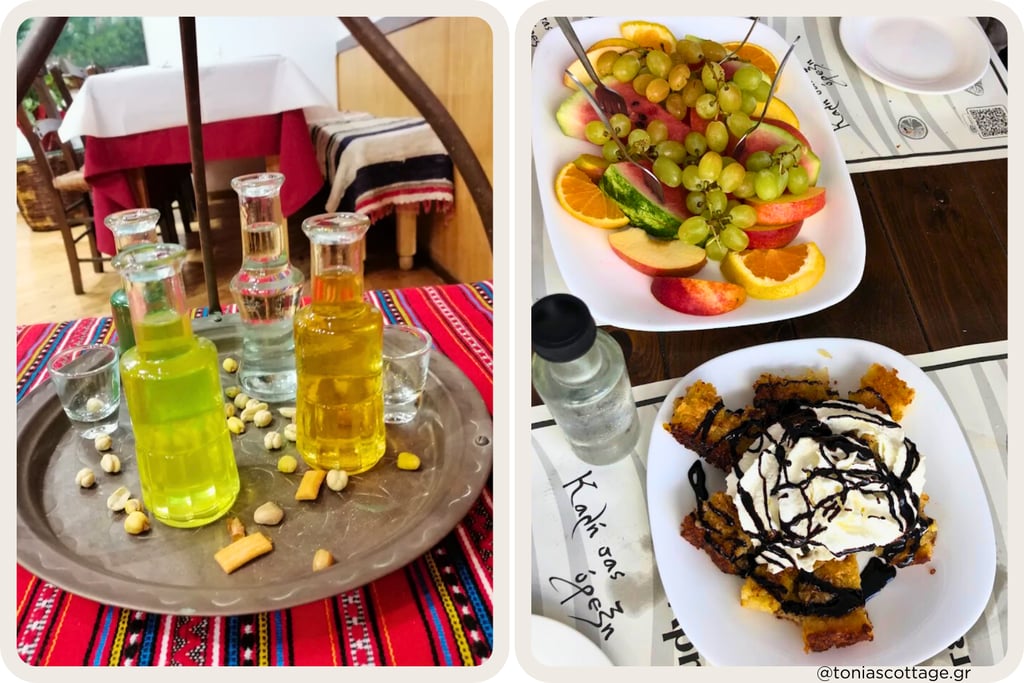
After you finish eating, the waiter will bring complimentary dessert "on the house"—usually fresh fruit, yogurt with honey, or sometimes a small sweet pastry. But the real ceremony is what comes next.
Raki (Tsikoudia)
A generous pour of raki appears at your table, often in a small carafe or bottle. This is grape-based spirit, clear and strong (usually 40-45% alcohol), distilled by families all over Crete after the grape harvest.
Raki is meant to cleanse the palate, aid digestion, and extend the pleasure of sitting at the table with good company. You can drink as much or as little as you like; no one's judging. The important thing is the gesture: the taverna is offering you their hospitality, their tradition, their welcome.
If you're in Alagni during autumn, you might witness (or even participate in) the rakokazano—the traditional raki distillation. It's a communal celebration with music, food, and plenty of tasting. (I've written about this experience here Meet authentic Crete: Leonidas’ Rakokazano in Alagni.)
Ouzo
Sometimes instead of raki, you'll be offered ouzo—the anise-flavored aperitif that turns cloudy when mixed with water. It's strong, distinctive, and polarizing. You either love it or you don't, but it's worth trying at least once to understand this essential Greek tradition.
The 10 essential Cretan dishes
1. Xoriatiki (Greek Salad)
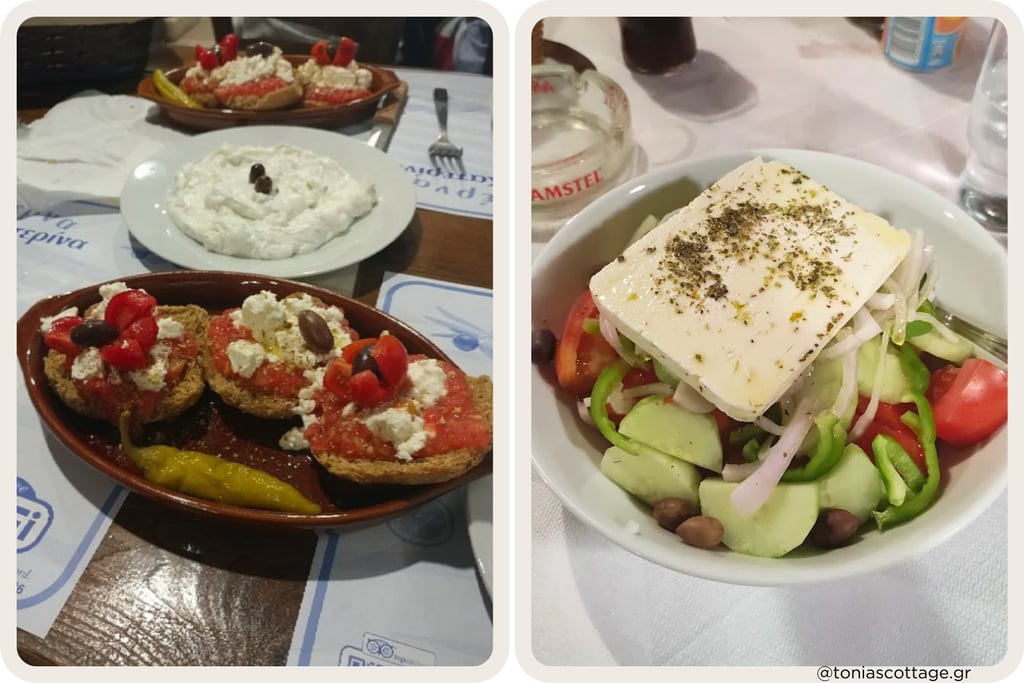
You might call it "Greek salad," but here it's simply salad—or more accurately, xoriatiki (village salad). This is the dish you'll crave long after you leave.
The ingredients are deceptively simple: chunky tomatoes, cucumbers, onions, green peppers, olives, a massive block of feta dusted with oregano, and a generous drizzle of olive oil and lemon juice. That's it. No lettuce, no additions, no fuss.
What makes it extraordinary is the quality. The tomatoes taste like tomatoes should taste. The feta is creamy and tangy. The olives were picked from trees you can probably see from your table. It's proof that when ingredients are this good, you don't need complexity.
Pro tip: The deeper you go into village tavernas away from tourist areas, the bigger the portions become—and the more generous the feta blocks. In the villages around Alagni, a "salad for one" could easily feed two hungry people.
2. Dakos (Cretan Rusk Salad)
This is Crete's answer to bruschetta, but infinitely better. It starts with paximadi—twice-baked barley bread that's rock-hard until you soften it with water or the juices from the toppings.
On top goes grated tomato, Cretan mizithra cheese (or sometimes xinomyzithra for a tangier version), dried olives, capers, and—of course—olive oil. The texture combination is addictive: soft, crunchy, juicy, creamy all at once.
Dakos is what Cretans have been eating for centuries as a quick, nourishing meal. It travels well, uses simple ingredients, and packs incredible flavor. You'll find it on every taverna menu, and no two are exactly alike.
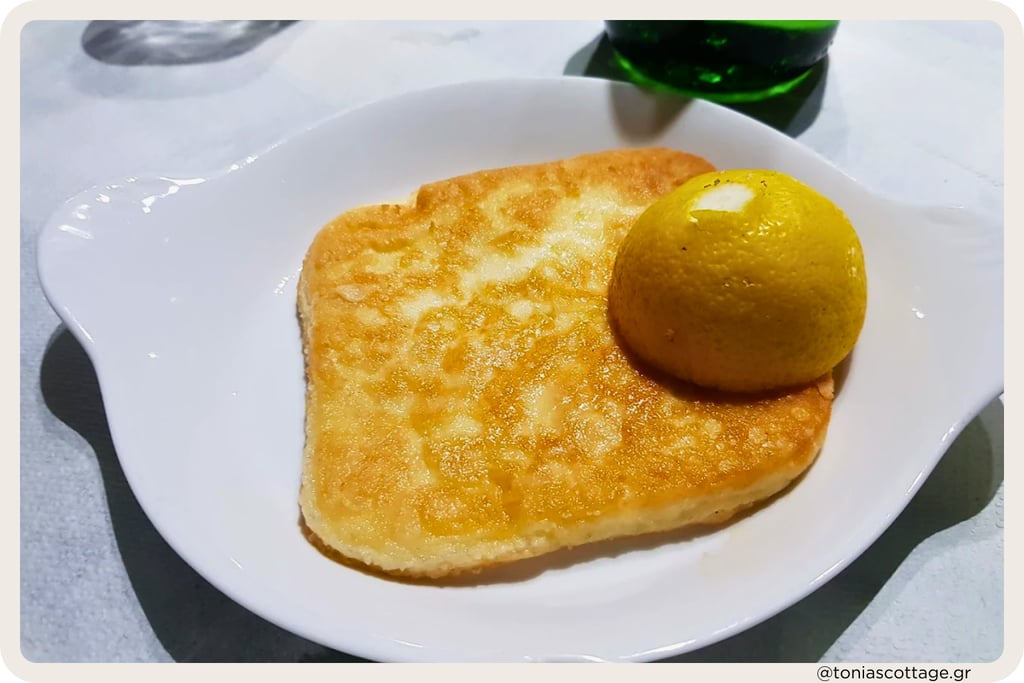
6. Saganaki (Fried Cheese)
If you love cheese (and I assume you do ☺️), saganaki will become your addiction.
This is Greek cheese (usually graviera or kefalotyri) sliced thick, lightly floured, and fried in olive oil until it's golden and bubbling. It arrives at your table still sizzling, served with a squeeze of lemon.
The outside is crispy, the inside is molten, and the flavor is rich and salty. It's simple, it's indulgent, and it's utterly satisfying. Order it as an appetizer to share... or don't share. I won't judge.
7. Antikristo (Slow-Roasted Lamb)
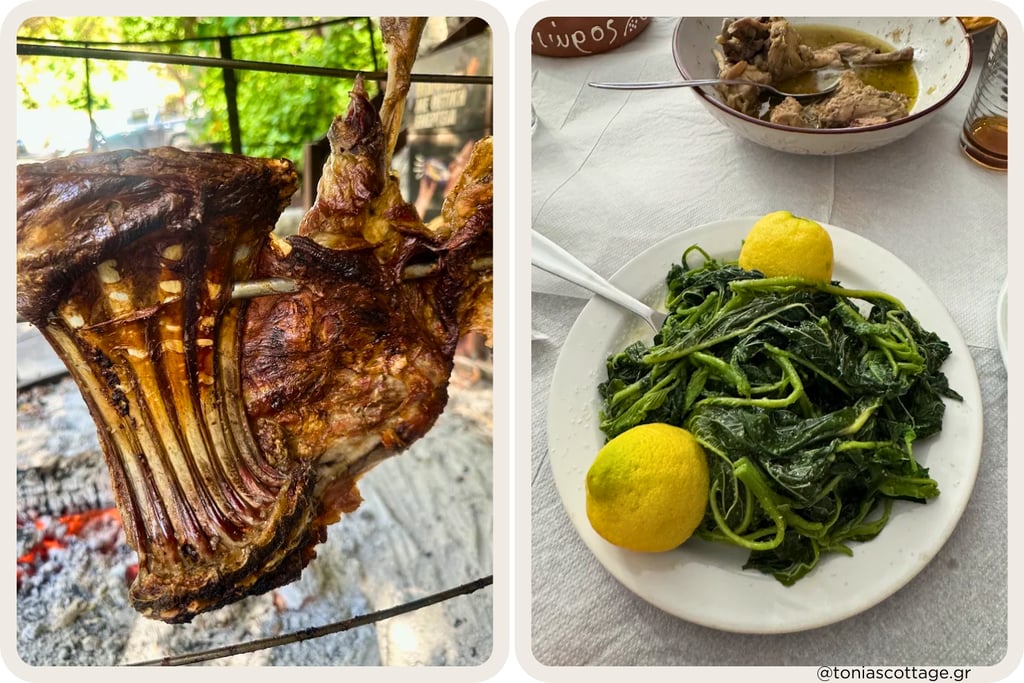
This is Crete's most traditional way of cooking lamb, and you won't find it on every taverna menu. Antikristo means "opposite" or "facing," referring to the cooking method: large pieces of lamb or goat are arranged around an open fire, slowly roasting for hours while the meat becomes impossibly tender.
The meat is seasoned simply—just salt and sometimes herbs—because the flavor comes from the slow cooking and the quality of the lamb itself. These animals graze on wild thyme, oregano, and other mountain herbs, which perfumes the meat naturally.
You'll most often find antikristo at village festivals, special celebrations, or tavernas that specialize in traditional cooking methods. If you see it on a menu, order it immediately.
8. Horta (Wild Greens)
Cretans have been gathering wild greens from the mountains for millennia, and horta remains a staple of every meal.
These aren't like the bitter greens you might avoid at home. Cretan horta are boiled until tender, then dressed generously with olive oil and lemon. The greens might include dandelion, chicory, amaranth, or whatever is growing wild that season.
The flavor is earthy, slightly bitter, completely addictive. Locals swear by horta for health and longevity—and considering Crete has one of the highest concentrations of centenarians in the world, they might be onto something.
What to know: Horta are served at room temperature as a side dish or appetizer. Don't skip them thinking they're just "greens." They're a window into how Cretans have eaten for thousands of years.
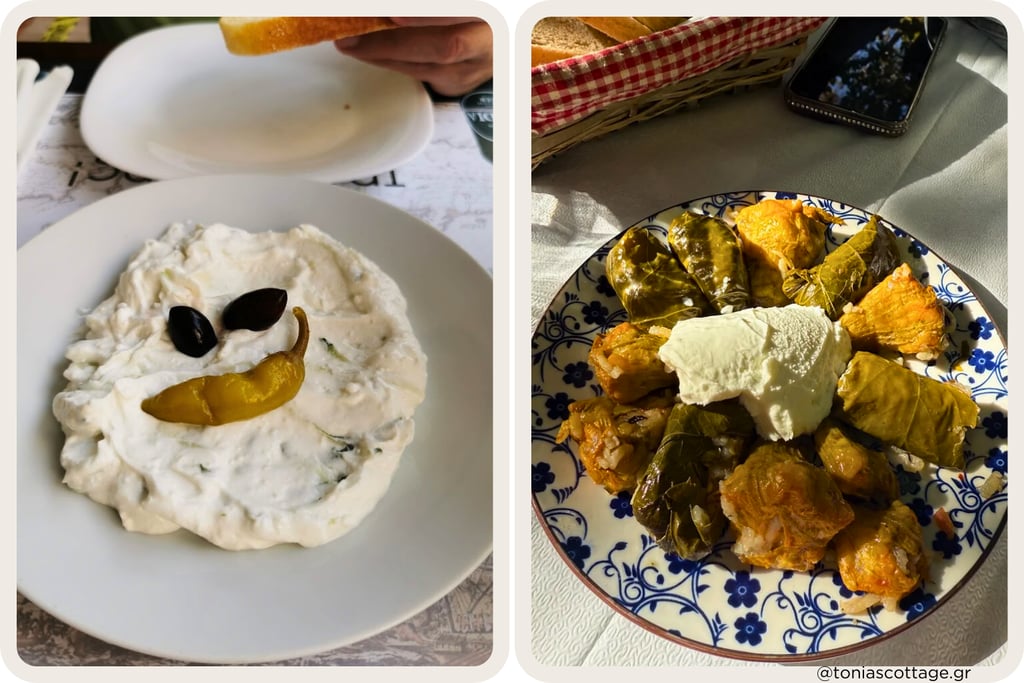
4. Tzatziki
You've probably had tzatziki before, but not like this.
In Crete, every taverna makes it differently. Some prefer it garlicky and bold. Others keep it mild and refreshing. The basics are always the same: thick Greek yogurt, cucumber, garlic, olive oil, lemon juice, and sometimes dill or mint.
The yogurt here is different—thicker, tangier, made from sheep's or goat's milk. It transforms a simple dip into something you'll want to spread on everything: bread, meat, vegetables, or just eat by the spoonful.
Local habit: Cretans use tzatziki as a cooling counterpoint to rich meat dishes. It's also perfect for dipping fresh vegetables or spreading on warm pita.
5. Dolmades (Stuffed Grape Leaves)
These little parcels appear throughout the Mediterranean, but each region claims theirs are best. In Crete, dolmades are typically stuffed with rice, herbs, onions, and sometimes minced meat, then rolled tight in grape leaves from local vineyards.
They're served cool or warm, always with a squeeze of lemon. The flavor is delicate: herbal, slightly tangy from the grape leaves, with the rice taking on all the aromatics.
A summer variation: When zucchini flowers bloom in late spring and early summer (May through July), Cretan cooks also stuff these delicate golden blossoms with the same rice and herb mixture. These are incredibly gentle and delicious, with a flavor even more subtle than grape leaf dolmades. The flowers are fragile and require a light touch, making them a true seasonal treat you'll find at tavernas with gardens or at local markets.
Making dolmades is time-consuming work, often done by the women of the family while sitting together and talking. When you eat them, you're tasting that patience and tradition.
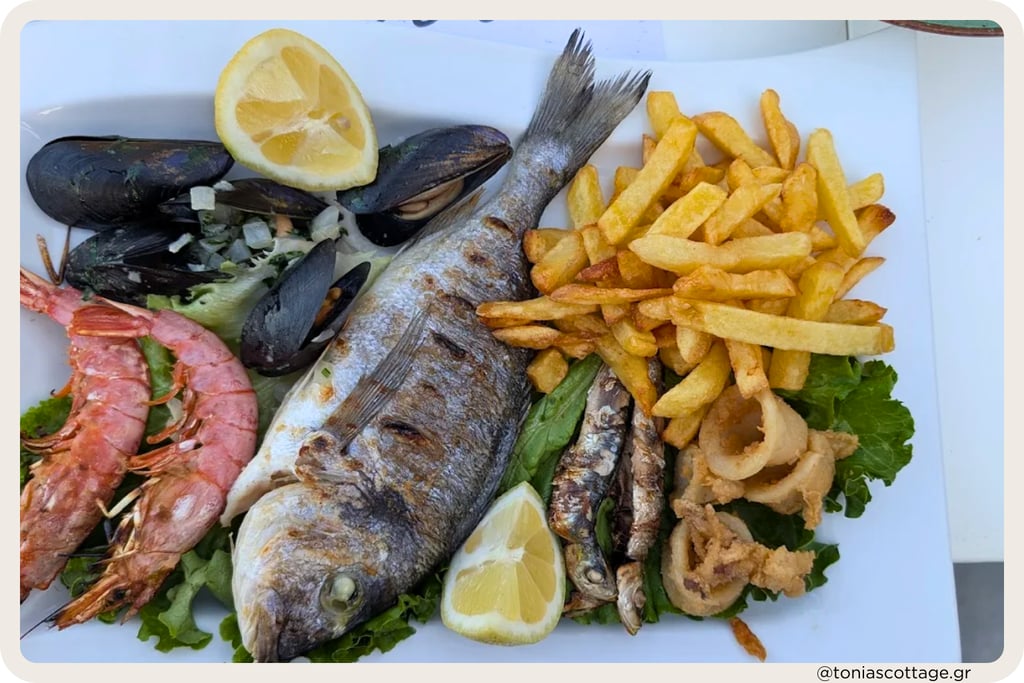
9. Fresh Fish (Psari)
Crete is an island, and the fish here is spectacular. Tavernas near the coast serve whatever was caught that morning, sea bream, red mullet, sea bass, grouper—simply grilled with lemon, olive oil, and herbs.
The best approach? Ask the waiter for the "dish of the day" or "fresh fish of the day." Unlike in some places where this phrase means "what needs to be used up," in Crete it genuinely means the freshest catch, often still on ice in the kitchen for you to see before it's cooked.
The fish arrives whole, head and all, grilled over charcoal. Squeeze lemon over it, drizzle on more olive oil (yes, more), and eat it with your hands. This is elemental, perfect cooking.
The deeper meaning of Cretan food
After two decades here, I've realized that food in Crete isn't really about the dishes themselves. It's about the moments they create.
It's about the way a meal slows time, how conversations deepen when you're not rushing through courses, how food becomes the excuse to gather but connection is the real nourishment.
It's about understanding that when someone serves you food they've made with their hands, they're offering something more than sustenance. They're sharing their story, their family's traditions, their place in an unbroken line of people who have cooked these same dishes for thousands of years.
So when you sit down at a Cretan taverna, don't just eat. Taste the olive oil and think about the trees it came from. Notice the view from your table. Talk to the person serving you—often they're the same family who cooked the food. Linger over that complimentary raki.
This is how Cretans have always eaten. And this is the gift they offer to everyone who visits: not just a meal, but an invitation into a way of being in the world.
Come hungry, leave transformed
The food in Crete changed how I think about eating, cooking, and living. It taught me that the best meals are simple, that generosity matters more than perfection, and that sitting at a table with others is one of the most human things we can do.
I hope these dishes become doorways for you—not just to great food, but to understanding why this island gets under your skin and never quite lets go.
When you visit Tonia's Cottage, you're not just booking accommodation. You're positioning yourself to experience this food culture authentically, to eat where locals eat, to be welcomed at tables where these traditions are still alive.
Come hungry. Come curious. Come ready to let the food tell you its stories.
Kali orexi! (Enjoy your meal!)
Tonia ❤️
What about vegetarians?
Let me be honest: traditional Cretan food is meat-centered. Greeks raise sheep, goats, pigs, and chickens, and these animals appear prominently on every menu.
That said, vegetarians who eat cheese will find plenty to enjoy:
All the salads (xoriatiki, dakos, various cooked vegetables)
Cheese dishes (saganaki, kalitsounia, fresh cheese platters)
Horta and other vegetable sides
Gigantes (giant beans in tomato sauce)
Fasolakia (green beans in tomato sauce)
Briam (roasted vegetables)
And so on 🙂
If you're vegan, it's more challenging. You'll need to specifically request dishes without cheese, eggs, or yogurt. Many tavernas will accommodate if you explain what you can and cannot eat, but options are limited.
Language tip: "Hortofagos" (χορτοφάγος) means vegetarian in Greek. "Den troo kreas" (δεν τρώω κρέας) means "I don't eat meat."
Where to eat near Tonia's Cottage
Staying in Alagni puts you in an ideal position to experience authentic Cretan tavernas without the tourist markup.
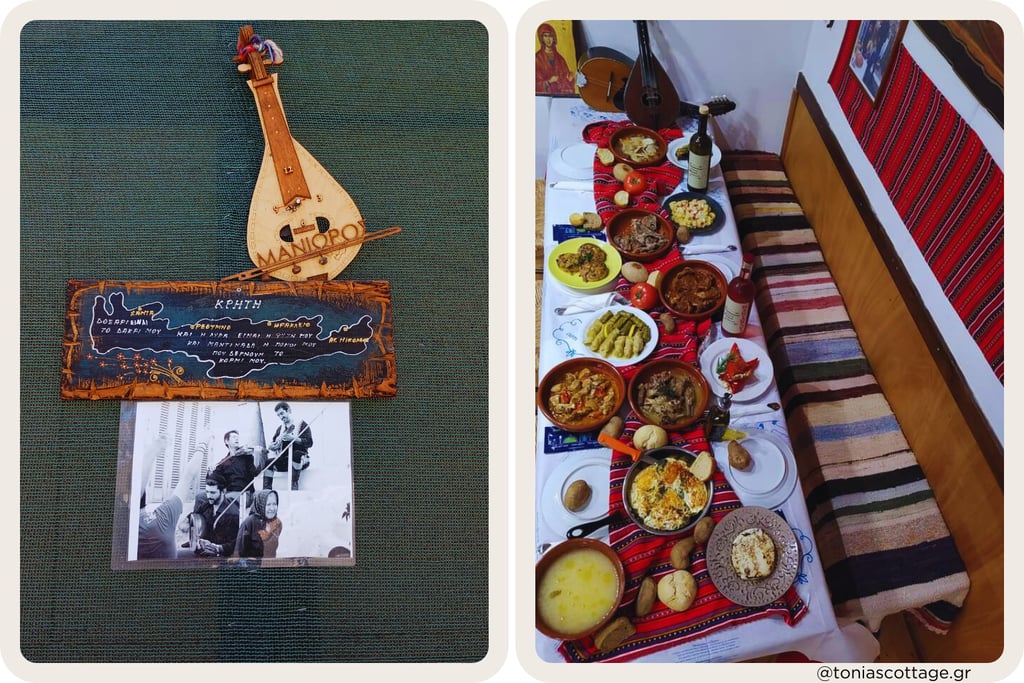
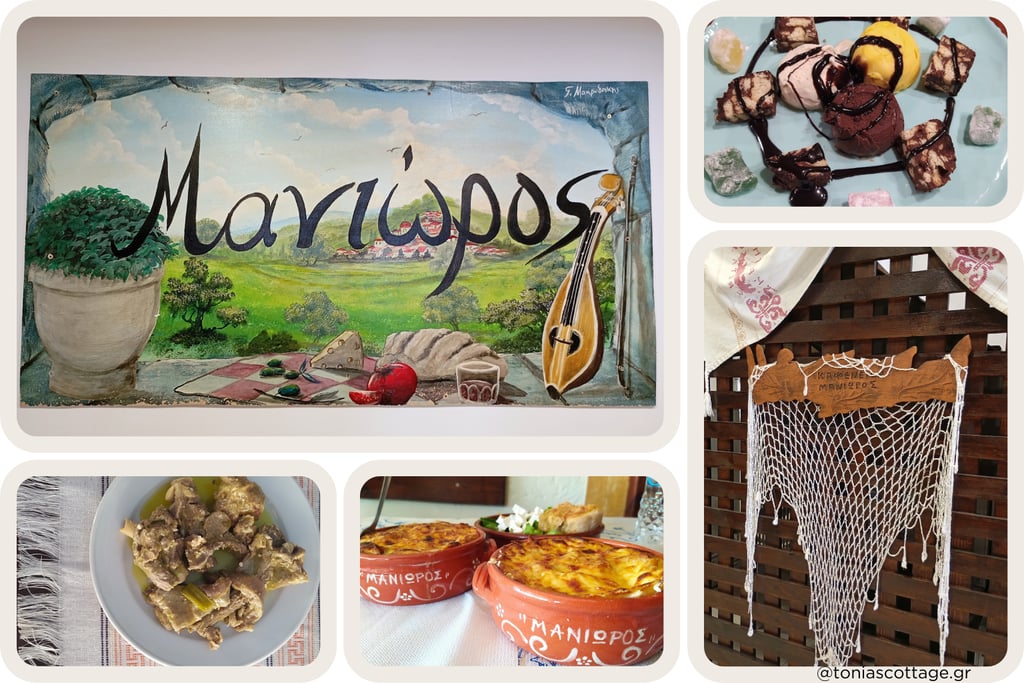
Arkalochori (10 minutes drive): The nearby town has several excellent tavernas, but my absolute favorite is Taverna Manioros—and here's why this place is special.
There's no menu at Manioros. Instead, the owner himself comes to your table and describes what his wife has cooked that day with whatever was freshest that morning. This is Cretan hospitality in its purest form—you're not ordering from a list, you're being invited into someone's home kitchen.
The atmosphere is rustic and warm, with walls covered in photographs and art celebrating Cretan culture and history. If you're lucky, Manioros might pick up his mandolin and play traditional Cretan music. The whole place is essentially a gallery of Cretan pride, and the food is prepared with the kind of love that only comes from generations of tradition.
This is exactly the kind of authentic experience you came to Crete to find.
Don't miss: Arkalochori's Saturday market (laiki) is also worth visiting for fresh produce, local cheese, olives, and a real taste of village life.
📍 Manioros Taverna on Google Maps | Facebook
South Coast (45-60 minutes): Villages like Lentas, Kali Limenes, and Keratokambos have seaside tavernas serving fresh fish with your toes practically in the sand.
Near the wineries: Both Lyrarakis and Paterianakis wineries near Alagni offer food with their wine tastings—a perfect way to pair local cuisine with local wine.
A few practical tips
Ordering: Meals in Crete are meant for sharing—it's not just tradition, it's philosophy. You start with meze (small appetizer dishes), then gradually add main courses to the table as the evening unfolds. The idea is simple but profound: sit, rest, eat slowly, and truly enjoy the company around you. Everyone tastes from every dish, creating a rainbow of flavors that shift and combine with each bite. This isn't eating—it's an experience. Order generously, share freely, and don't rush. The best meals in Crete last for hours.
Tipping: Crete isn't like America—there's no automatic 20% expectation here. Tipping is appreciated but not mandatory, and locals approach it with a relaxed generosity rather than rigid rules.
If the service was good, simply round up the bill—a €47 meal becomes €50. If the experience was exceptional, if the owner played mandolin for you, if the food transported you, leave what your heart tells you. There's no wrong amount when the gesture comes from genuine appreciation.
Even for average service, a small tip (a euro or two) is a kind gesture that acknowledges someone's work. Greeks understand that showing gratitude doesn't require mathematics, but sincerity. Use your judgment, be generous when moved to be, and you'll fit naturally into the rhythm of Cretan hospitality.
Service: Greek hospitality means you're never rushed. Your table is yours for the evening. This isn't slow service—it's the point. Relax into it.
Pricing: Most traditional tavernas are remarkably affordable. A full meal with wine might cost €15-25 per person. Tourist areas charge more.
Timing: Lunch is typically served 1-4pm, dinner starts around 8pm and can go late. Tavernas are flexible, but these are the traditional times.
10. Fava (Yellow Split Pea Purée)
This humble dish is pure Cretan comfort food—and proof that simplicity can be sublime.
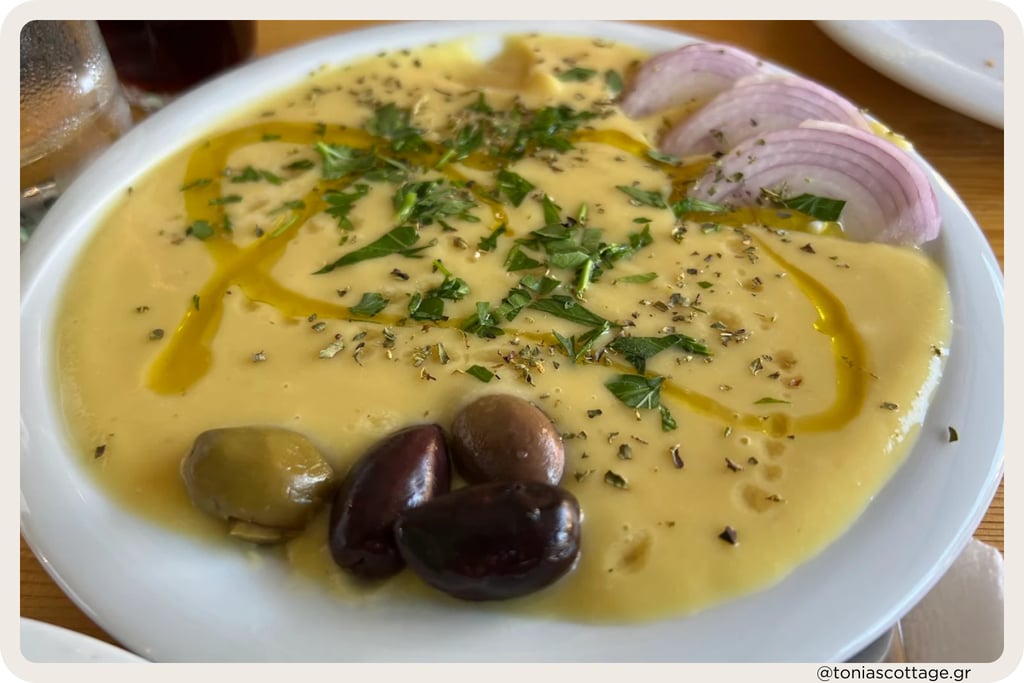
Fava is made from yellow split peas slow-cooked until they break down into a creamy, velvety purée, then finished with olive oil, lemon, and sometimes caramelized onions. It's served warm or at room temperature, drizzled generously with more olive oil and often topped with capers, raw onions, or fresh herbs.
The texture is silky smooth, the flavor earthy and satisfying. It's filling without being heavy, and it showcases what Cretan cooking does best: transforming simple, inexpensive ingredients into something deeply delicious.
Fava appears on nearly every taverna menu as a meze, but don't underestimate it. This is the dish locals have relied on for centuries—nutritious, affordable, and utterly satisfying. Scoop it up with bread and let the olive oil work its magic.
Follow Tonia's Cottage
Made with ❤️
© 2024 Tonia's Cottage | All Rights Reserved
Property Registration Number (AMA): 00002660089
About Tonia's Cottage
A peaceful holiday home in the heart of Crete, surrounded by vineyards and traditional villages. An ideal base for discovering authentic Crete, local wineries, beautiful beaches, and mountain landscapes.
Why stay here?
Contact details
(+30) 697 054 0969
info@toniascottage.gr
linktr.ee/toniascottage
Alagni Village
70300 Arkalochori
Crete Island, Greece
Explore on platforms
Airbnb
Booking.com
HomeToGo
Vrbo
Slowhop