Story time: Greek, the language that found me
TONIA'S STORIES
Author: Tonia
7 min read
How one book, one island, and one language changed everything
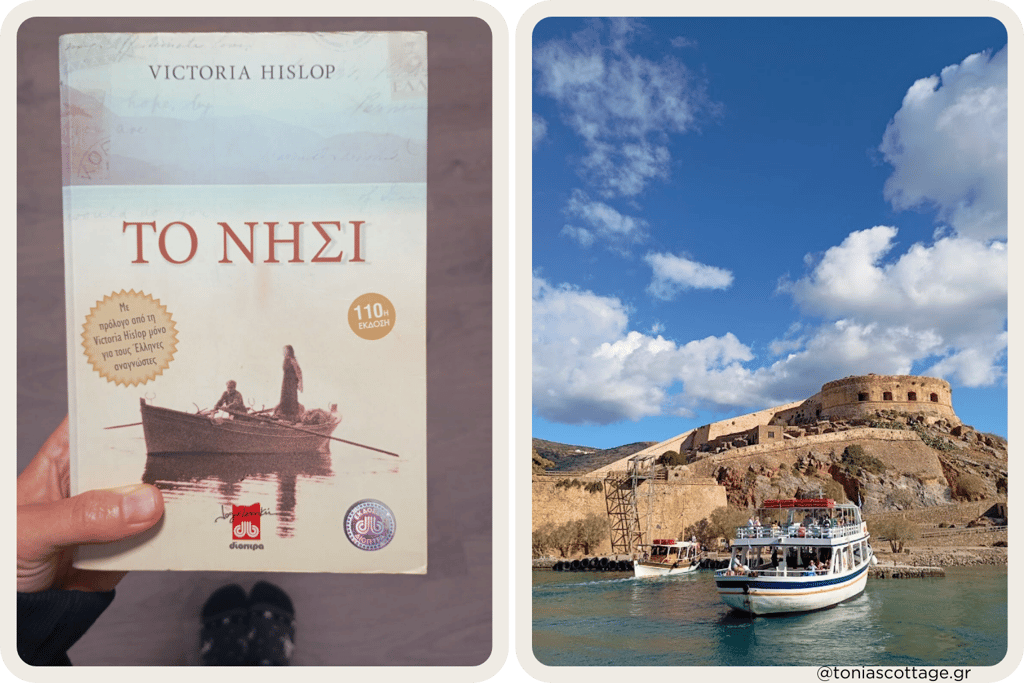
There's a moment in every love story where everything changes. For some, it's a glance across a crowded room. For me, it was a book my husband picked up in a charity shop in England—a book he chose in less than a second because he's not patient enough to browse.
That book was The Island by Victoria Hislop, and it changed everything. ✨
The beginning: slow and uncertain
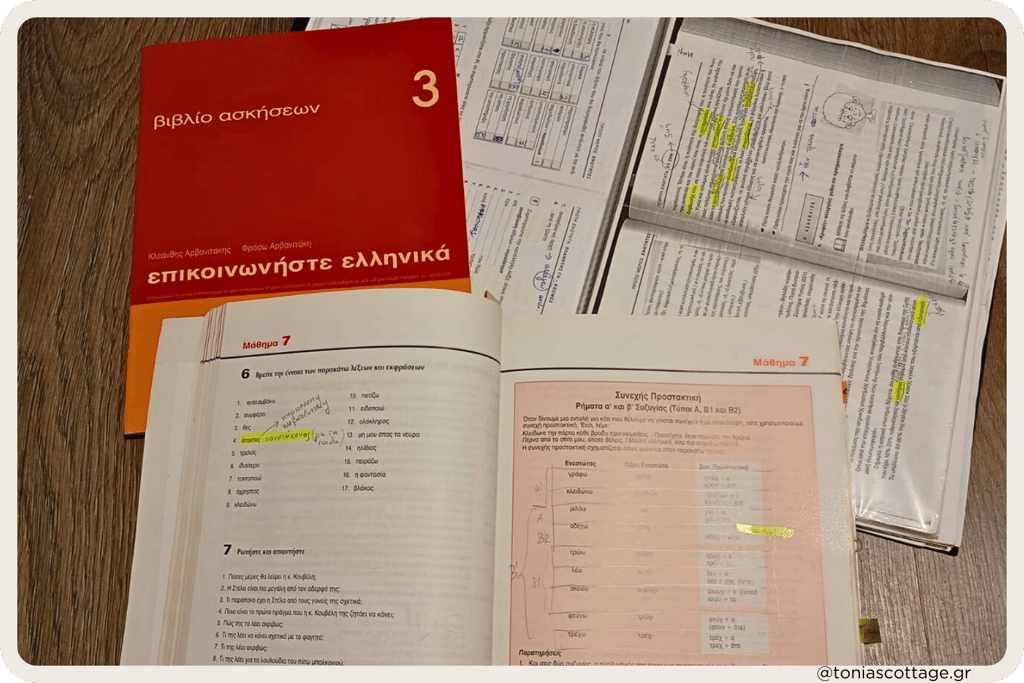
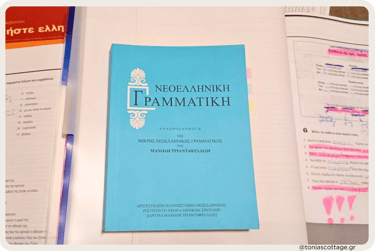
I found a Greek teacher in our small town (located two hours drive from London). I went to lessons regularly, learning slowly, methodically. When we moved to Crete, I signed up for a Greek course funded by the European Union for foreigners. I met people from all over the world, including a friend from Russia who spoke better Greek than me (which motivated me to learn even more) and had two Greek friends helping her. They became my best friends, and we still stay in touch. I am still so grateful I met them.
I listened to podcasts. I read books. I practiced constantly.
But I couldn't imagine being fluent. My brain couldn't grasp that one day, words would just flow.
Living but not alive
I first came to Crete as a tourism student from Poland, doing a hotel internship. That's where I met Aris, who would become my husband. But I was afraid, afraid of not knowing the language, the customs, the unspoken rhythms of life here (and not knowing myself yet). So we made what seemed like the practical choice: we moved to an English-speaking country where we could build our life together safely.
After two years, something felt wrong. Life had become flat, colorless—just work, money, routine, repeat. Every day was the same. We were living, but not alive.
The language that understands me
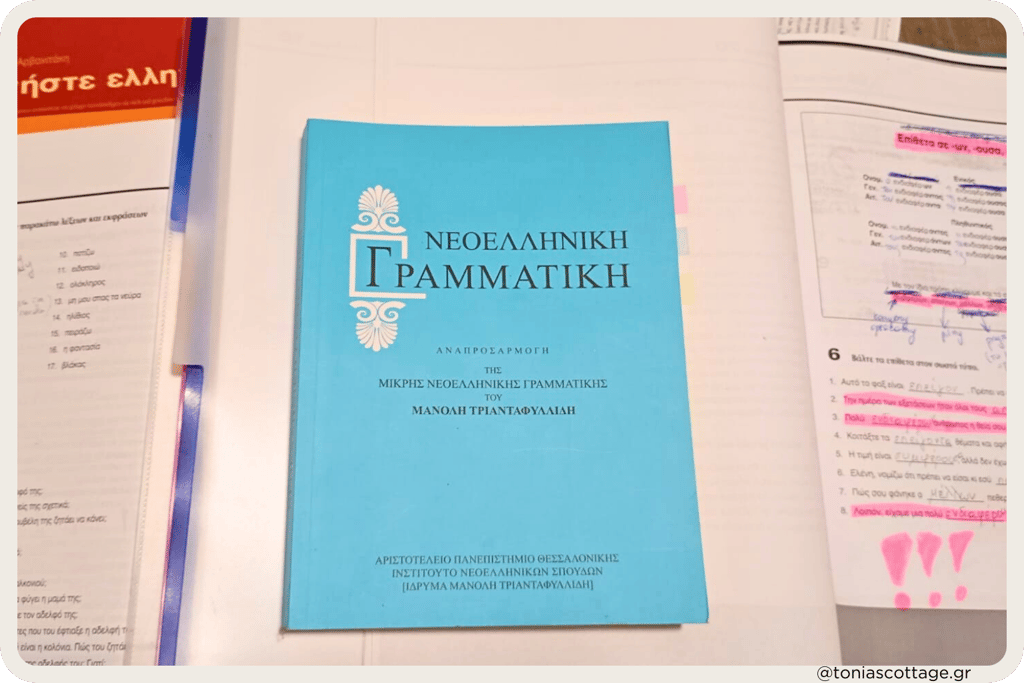
Greek carries depth in a way most languages can't imitate. It's not afraid of intensity. Emotion lives inside the structure itself. Symbolism shows up in everyday phrases. Even grammar holds philosophy.
This is why Greek feels both challenging and magnetic: its depth matches my inner depth.
The metaphors, the emotional awareness, the layered thinking—the language actually fits me... and I'm just still unlocking the doors.
And that's the beauty of it. After all these years of speaking Greek, I still discover new layers, new meanings, new ways the language mirrors my soul.
A book, a dream, a beach
Then came that book. I started reading The Island and couldn't stop dreaming about Crete. As I turned the pages, a memory swept deep onto my mind. During my internship my friend and I hitchhiked to Spinalonga. It was the first place I visited outside the hotel and I fell in love with the island at first sight. That memory came back to me with full force.
But I still couldn't imagine myself actually living here. It felt impossible, like a dream that belonged to someone else.
We booked a holiday to Crete anyway. I remember sitting on the beach, crying, while Aris told me, "Don't worry, we'll come back one day."
When we returned to England, I couldn't let go of the feeling. One morning I simply woke up and decided: if we are going to change our life again, why not move to Crete?
The switch: when Greek became mine
I had to return to Poland for a few months for a medical emergency. During that time, I studied Greek every single day. When I came back to Crete, I told my friends, "I want to speak only Greek with you now, not English."
I don't remember the exact day it happened. But suddenly, I woke up one morning and words started pouring out of my mouth. Almost fluently. Naturally.
I was working at a travel agency at the time. They'd never heard me speak Greek properly before. For an entire year afterward, they kept introducing me to people and telling the story of how amazing it was that I could speak Greek.
How I actually feel when speaking Greek
I don't feel lost in Greek. I feel at home in its depth.
While some people find Greek chaotic or overwhelming, I find it familiar—like stepping into a story I already understand. The language has space for intensity, tenderness, poetic honesty, humor mixed with tragedy, emotional precision.
I feel the emotional temperature of words before I fully understand their grammar. I sense intention, relationship, cultural texture. My mind doesn't go word-by-word—it creates scenes, feels energy, reads hidden layers.
Greek brings me into presence.
Speaking Greek slows my mind in the best way. I choose words intentionally. I listen more carefully. I become more grounded and embodied. The language brings me into the moment.
Learning to belong
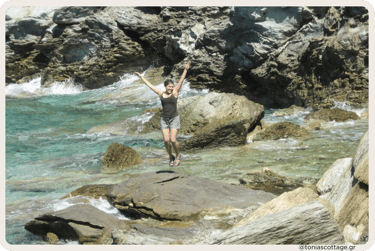
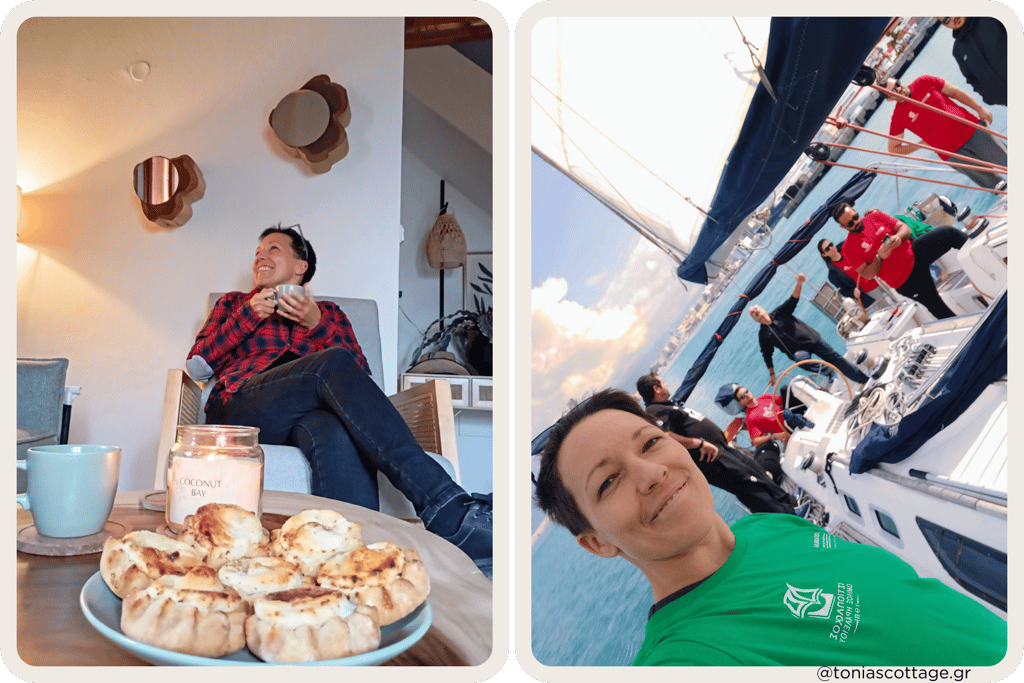
To truly enter Cretan life, I knew I had to immerse myself completely. I went alone to workshops: cookie baking, olive oil soap making, pottery and philosophy classes. I signed up for activities where I'd be surrounded by locals.
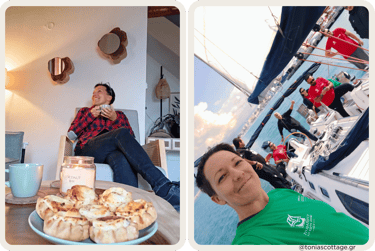
I would go alone to coffee shops, watching how locals opened their mouths when they spoke, how they gestured, how they simply were. I was soaking in all those details: the body language, the rhythms, the unspoken social codes. I passed the written Greek exam for my open sea sailing license, which was incredibly difficult.
I learned that you don't just study a language; you inhabit it. You live it. You let it shape how you think and feel.
It took me 15 years to be able to read aloud fluently at normal speed. After 10 years of speaking, I took elocution lessons with a teacher from Thessaloniki who helped me enormously. She taught me the sounds, how to pronounce properly, especially the 'σ' sound (which in Polish comes out a bit like a snake hissing—so I have been told by Greeks😄🐍).
Speaking Greek as respect.
By speaking Greek as best I can, I honor ancient Greece—τιμῶ the culture, the history, all this richness. It's the least I can do to express my inner world to the outer one and contribute something meaningful back.
Greek isn't just a tool for communication. It's a way of seeing, feeling, being.
The key: a TV series and listening
Here's what unlocked something in my brain: the Greek TV adaptation of The Island. The same book that started this whole journey. The series had incredible actors and music, and I desperately wanted to understand what they were saying.
I kept asking Aris to translate for me. But one day he just disappeared instead of translating the whole episode—apparently sitting there translating for an hour wasn't his idea of entertainment 😄. So I sat there alone and thought, "I really want to know what they're saying."
Something switched in my mind. I started truly listening, and suddenly I could understand. It felt magical!
Eventually, I ended up working as a travel agency representative and guiding a few tourist groups at Spinalonga, telling visitors about The Island. I even read the book in Greek. The circle completed itself.
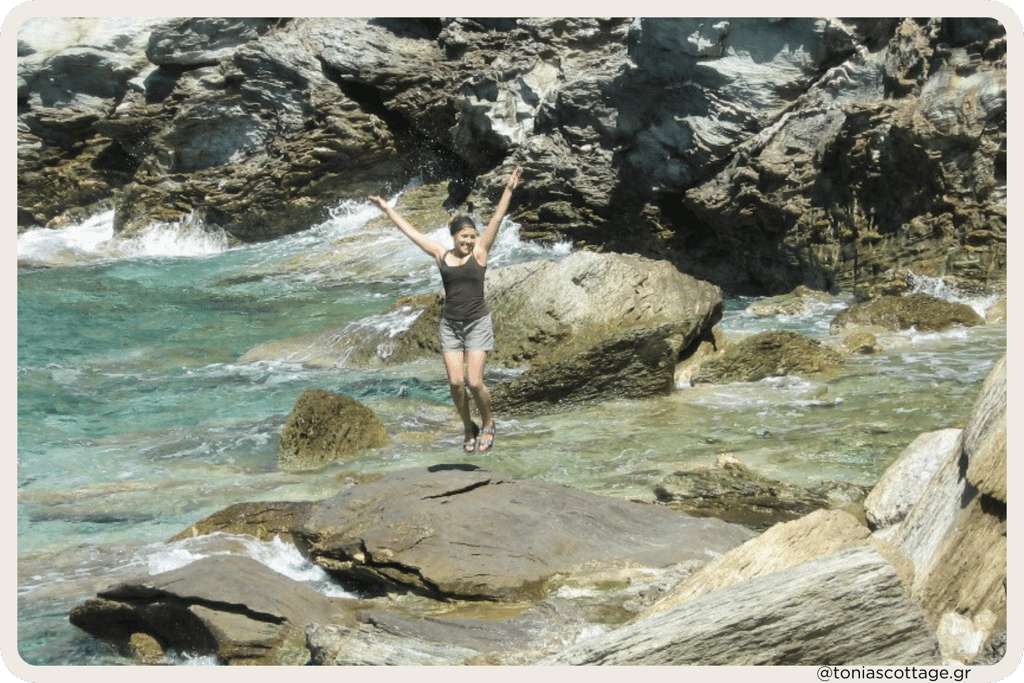
Or so I thought. Recently, I synchronistically met an open sea swim guide and ended up swimming from Plaka to Spinalonga. Apparently, my relationship with this island needed to get even more intense. The story goes on.
Greek speaks in images
I think in metaphors and emotional landscapes. Greek does too.
When Greeks say "Μου λείπεις" (you are missing from me), it's not just "I miss you"—it's about connection, absence, presence in your heart.
When they say "Έχω πολλά στο κεφάλι μου" (I have many things in my head), you can actually see the image of an overflowing mind.
When someone says "Με έχει πιάσει το άγχος" (anxiety has grabbed me), you feel the creature pulling at you.
One word, many layers
Greek words hold centuries of meaning, all at once:
Λύπη (lypi) doesn't just mean "sad." It carries ache, longing, heaviness of soul.
Φιλότιμο (filótimo) isn't just honor—it's generosity, loyalty, stepping up for others, moral duty. An entire ethical system in one word.
Μεράκι (meráki) means doing something with soul, care, love, artistry. There's no English equivalent.
Ancient echoes in modern words
Πανικός (panikós) comes from Pan, the god of wild nature. Panic was the sudden fear that appeared in forests and mountains.
Αλήθεια (alíthia), truth, literally means "un-forgetting"—from a- (not) + λήθη (forgetfulness).
These aren't just words. They're doorways into entire worlds of meaning.

So...
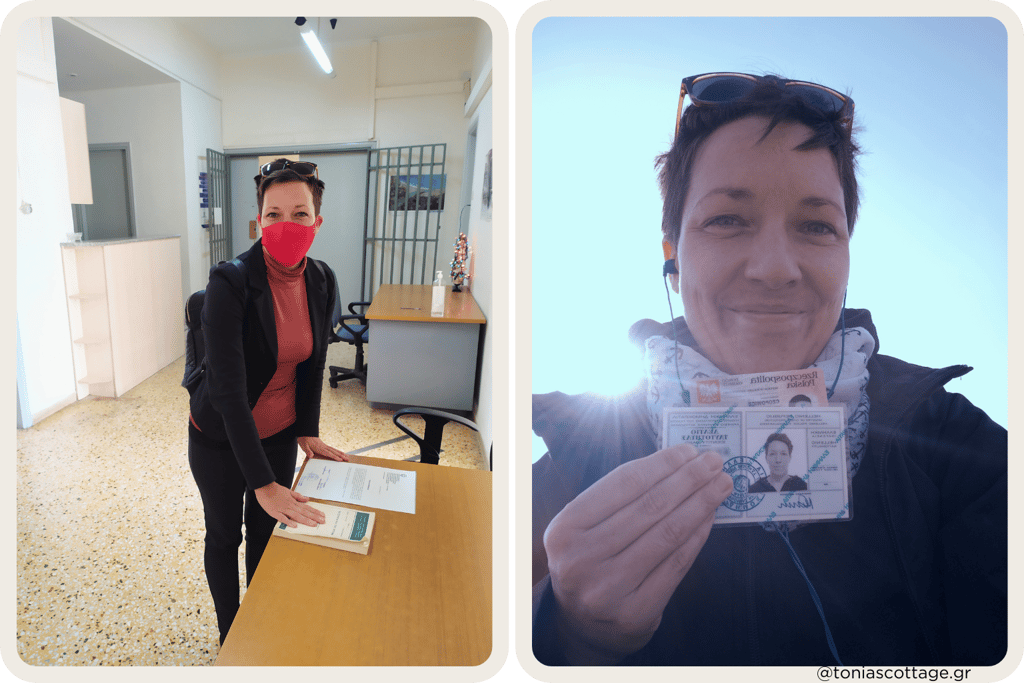
In 2021, after two years of waiting, I became a Greek citizen. The inauguration ceremony took place the day after my dad passed away, during COVID times, when the world already felt so fragile and distant. I stood there taking the oath, pledging to be a good citizen, feeling joy and grief in the same breath. I know he would have been proud.
Now I carry this citizenship with gratitude, pride, and a deep sense of home.
Maybe one day you will walk these same paths, hear the same language shaping the air, and feel what I felt when Greek finally opened my world. And if you ever want to see Crete the way I see it, as someone who earned her place here, I will be here to share a little more of this island's soul with you.
Tonia ❤️
Follow Tonia's Cottage
Made with ❤️
© 2024 Tonia's Cottage | All Rights Reserved
Property Registration Number (AMA): 00002660089
About Tonia's Cottage
A peaceful holiday home in the heart of Crete, surrounded by vineyards and traditional villages. An ideal base for discovering authentic Crete, local wineries, beautiful beaches, and mountain landscapes.
Why stay here?
Contact details
(+30) 697 054 0969
info@toniascottage.gr
linktr.ee/toniascottage
Alagni Village
70300 Arkalochori
Crete Island, Greece
Explore on platforms
Airbnb
Booking.com
HomeToGo
Vrbo
Slowhop