
Easter in Crete 2026: experience authentic Greek Orthodox traditions
VILLAGE LIFE & TRADITIONS
Author: Tonia
4 min read
Easter in Crete: why you need to experience It
If you haven't experienced Easter in Crete, you haven't really experienced Crete.
Greek Orthodox Easter in Crete falls on April 12th in 2026, and it's not your quiet, chocolate-egg-and-Sunday-roast kind of Easter. This is something else entirely.
Why Greek Easter is Different
Greek Orthodox Easter doesn't usually line up with the Easter you might know - we follow a different calendar. In 2026, it's on April 12th, which means Crete in spring when nature's at her best. Wildflowers everywhere, great weather, the island buzzing with life.
For Greeks, Easter is bigger than Christmas. It's the most important celebration of the year. People who've moved away come back to their villages. Families reunite. The whole country basically stops for a week.
Experience Easter from Tonia's Cottage
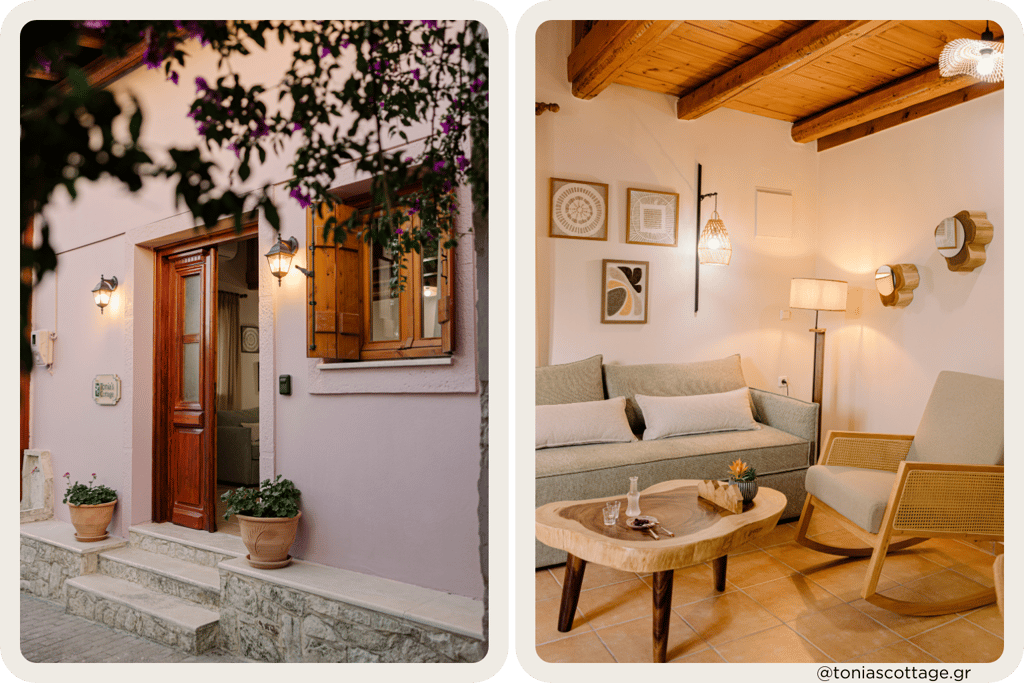
At Tonia's Cottage, you're in a village setting : that authentic, intimate experience where you might get invited to a neighbor's home for Easter lunch. But we're close enough to bigger towns for those massive processions too.
You can't really understand Easter in Crete until you're here, standing in a village square at midnight with fireworks exploding overhead and everyone celebrating like it's the most important moment of the year. Because for them, it is.
Want to experience real Crete? Come for Easter — you won't forget it.
Check availability and book your escape: toniascottage.gr/book-now, or get in touch — I'm happy to answer any questions before you decide.
Tonia ❤️
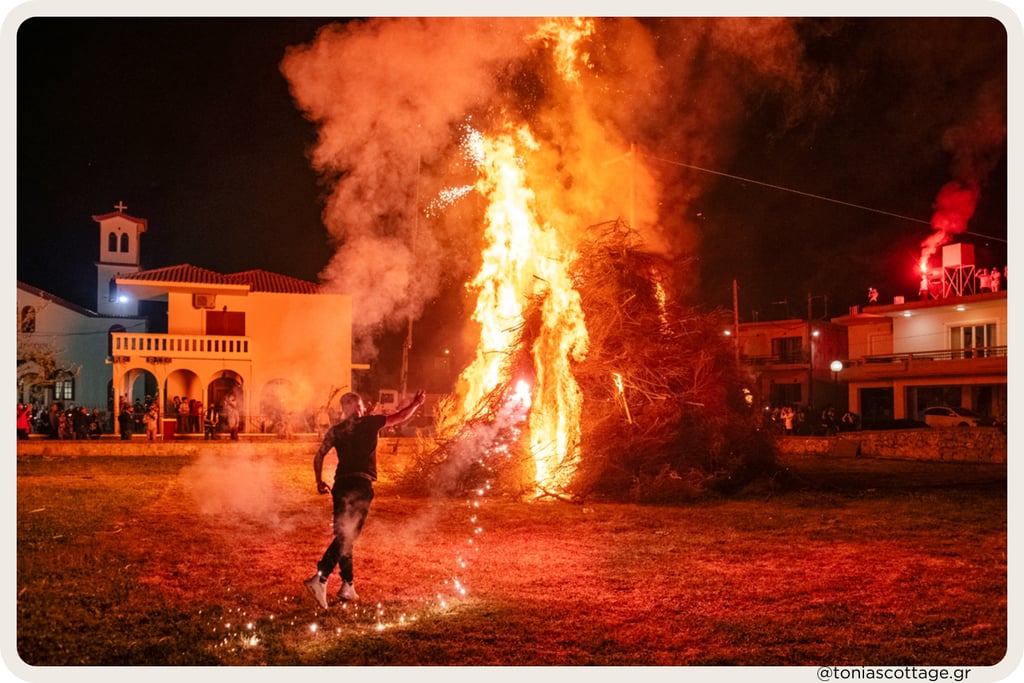
What happens: Holy Week
During Holy Week, groups gather in homes to craft traditional crosses from date palm fronds, an intricate art passed down through generations. On Palm Sunday (April 5th), these handmade crosses and olive branches get blessed in church, then taken home to place in family iconostases. The tradition recreates Christ's entry into Jerusalem 'with palms and branches.'
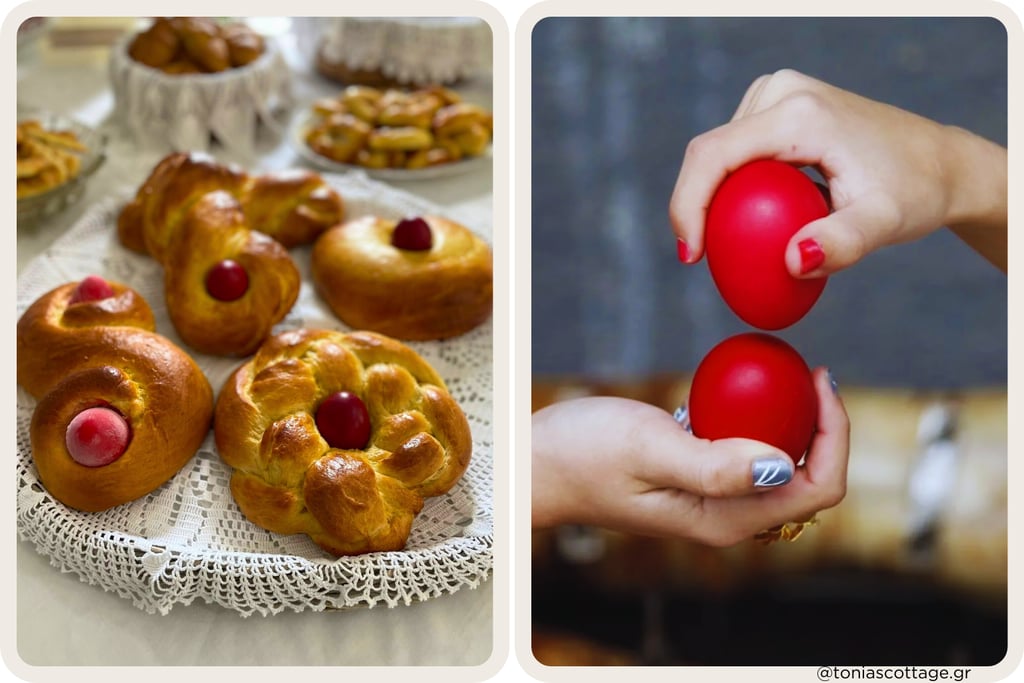
From the Monday before Easter, preparations ramp up. Old ladies carry homemade Easter bread (tsoureki) and kalitsounia (cheese and herb pies) to the bakery ovens. Kids paint eggs red with their grandmothers. Young people collect wood for village bonfires. There's rivalry about who'll have the biggest. You'll hear random fireworks all week as people test them out.
What happens: Good Friday (April 10th)
Church bells ring the death toll all morning - one steady ring, over and over. Most tavernas stay closed. The island holds its breath.
Around 8:30pm, the Epitafios processions begin. In every village and town, a flower-covered bier representing Christ's tomb gets carried through the streets by young men - traditionally, those heading to military service. The priest leads, everyone follows dressed in black.
In bigger towns like Heraklion or Agios Nikolaos, these processions wind through entire city centers. People on balconies throw flowers down. Old women pass underneath the bier for blessings.
What it feels like: Everyone around you knows exactly why they're walking, why they're following this flower-covered bier. You're not just watching a tradition - you're part of it. The dim streets, flowers, tolling bells - it gets you right in the chest.
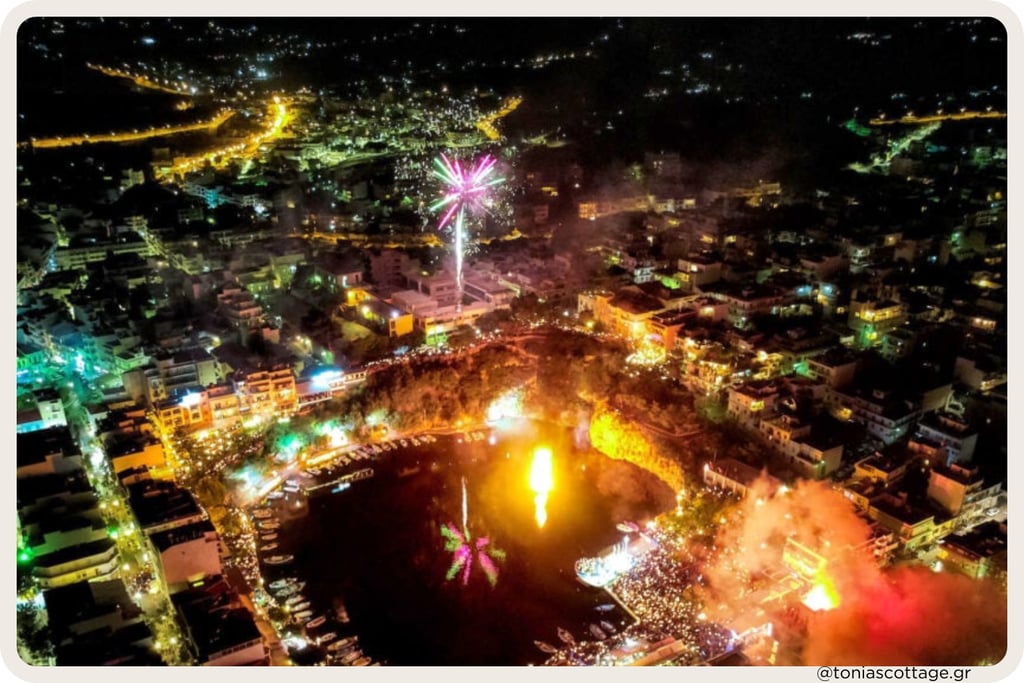
What happens: Holy Saturday (April 11th)
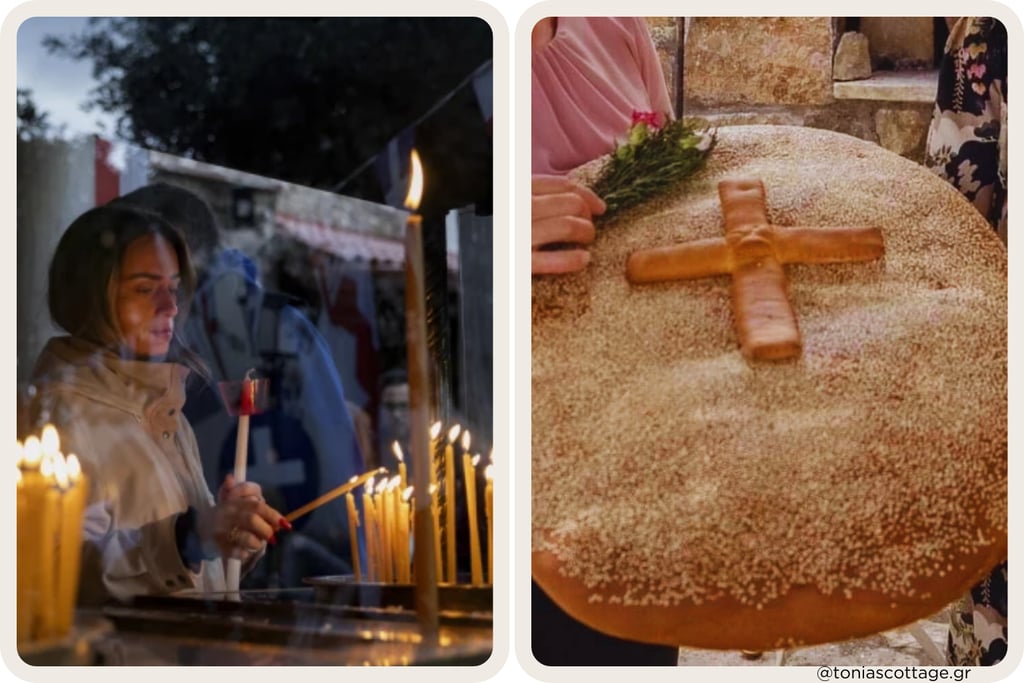
Kids build bonfires and Judas effigies during the day. By evening, everyone's at church with candles. Churches pack out from 11pm.
At midnight, the priest announces "Christos Anesti!" - Christ is Risen.
The sky explodes. Fireworks everywhere: every village, every town, all at once. Judas replicas go up in flames. Everyone rushes to light their candle from the priest's holy flame, then tries to get home without it going out - you'll see people driving one-handed, holding a lit candle with the other. At home, they mark a black cross in soot above the doorway for luck.
The 40-day fast ends at midnight with magiritsa, a traditional soup made from lamb offal, herbs, and lemon. Then comes tsougrisma - the egg-cracking game. You greet people with "Christos Anesti!" They respond "Alithos Anesti!" and you crack red eggs together. Last uncracked egg wins. People get genuinely competitive.
What it feels like: All hell breaks loose. Chaos, explosion, fire, light. The noise is incredible. After Friday's solemnity, this is pure eruption. It shakes your soul.
What Happens: Easter Sunday (April 12th)
From 8am, families tie whole lambs (souvla) onto spits over olive and grapevine wood fires. The lamb turns for at least six hours. Many also prepare kokoretsi: lamb offal wrapped in intestines and slow-roasted alongside the lamb.
Wine starts in the morning, it's tradition. By early afternoon, tables groan with food: tsoureki (Easter bread), red eggs, kalitsounia, salads, lamb, potatoes roasted in the juices, and kokoretsi. Traditional Cretan music plays everywhere, you'll hear the tsibouli (traditional flute) and lyra filling village squares. People sing, dance. It goes on into the evening.
Walk past someone celebrating outside? There's a good chance you'll be called over for food and drink. The more the merrier. It's Cretan hospitality on overdrive 😊.
What it feels like: Wood smoke, roasting lamb, herbs. Wine and music and laughter. Pure celebration.
Easter in Crete: Village vs city
The cities are spectacular. Thousands of people, massive processions, huge Judas burnings. Mountains and sea as backdrop.
Villages are more intimate. Everyone knows everyone. When you light your candle at midnight, you're surrounded by neighbors and community. It feels grounded in tradition in a way that's hard to describe.
Both are incredible. Just different.
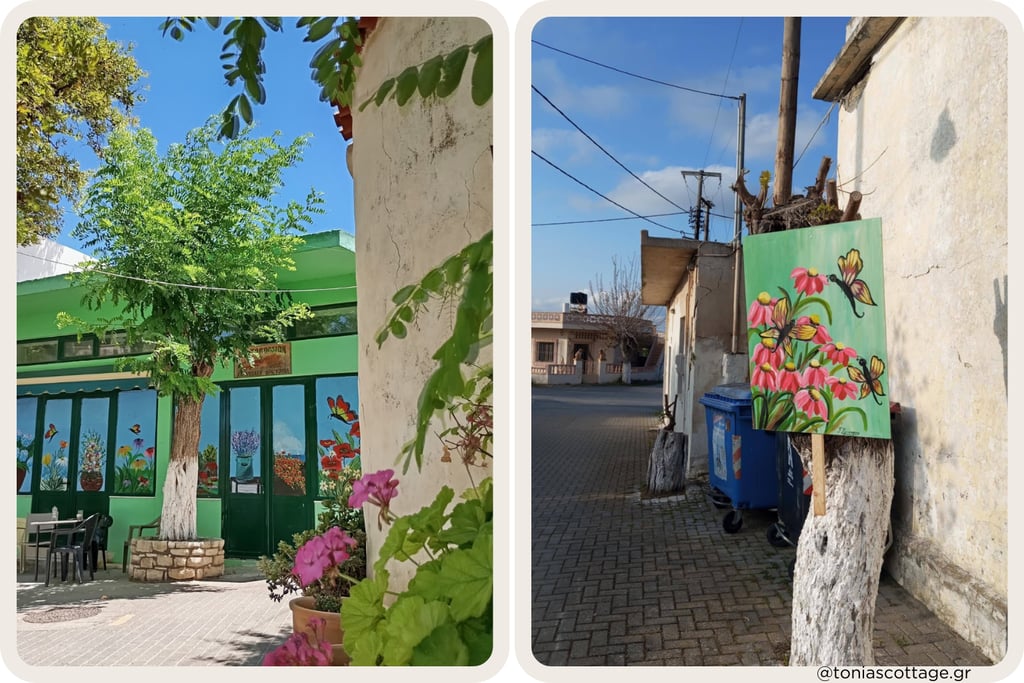
In Alagni, the village gets an extra touch of magic during Easter. Local artist Giuli decorates the streets with her vibrant paintings: floral door frames, colorful tables, festive murals that transform the plateia into an open-air gallery. Her art blends seamlessly with the ancient Easter traditions, making the celebration even more special.
Follow Tonia's Cottage
Made with ❤️
© 2024 Tonia's Cottage | All Rights Reserved
Property Registration Number (AMA): 00002660089
About Tonia's Cottage
A peaceful holiday home in the heart of Crete, surrounded by vineyards and traditional villages. An ideal base for discovering authentic Crete, local wineries, beautiful beaches, and mountain landscapes.
Why stay here?
Contact details
(+30) 697 054 0969
info@toniascottage.gr
linktr.ee/toniascottage
Alagni Village
70300 Arkalochori
Crete Island, Greece
Explore on platforms
Airbnb
Booking.com
HomeToGo
Vrbo
Slowhop